
The Grief You Think You Haven't Earned: Mental Health and the Spokane Fires
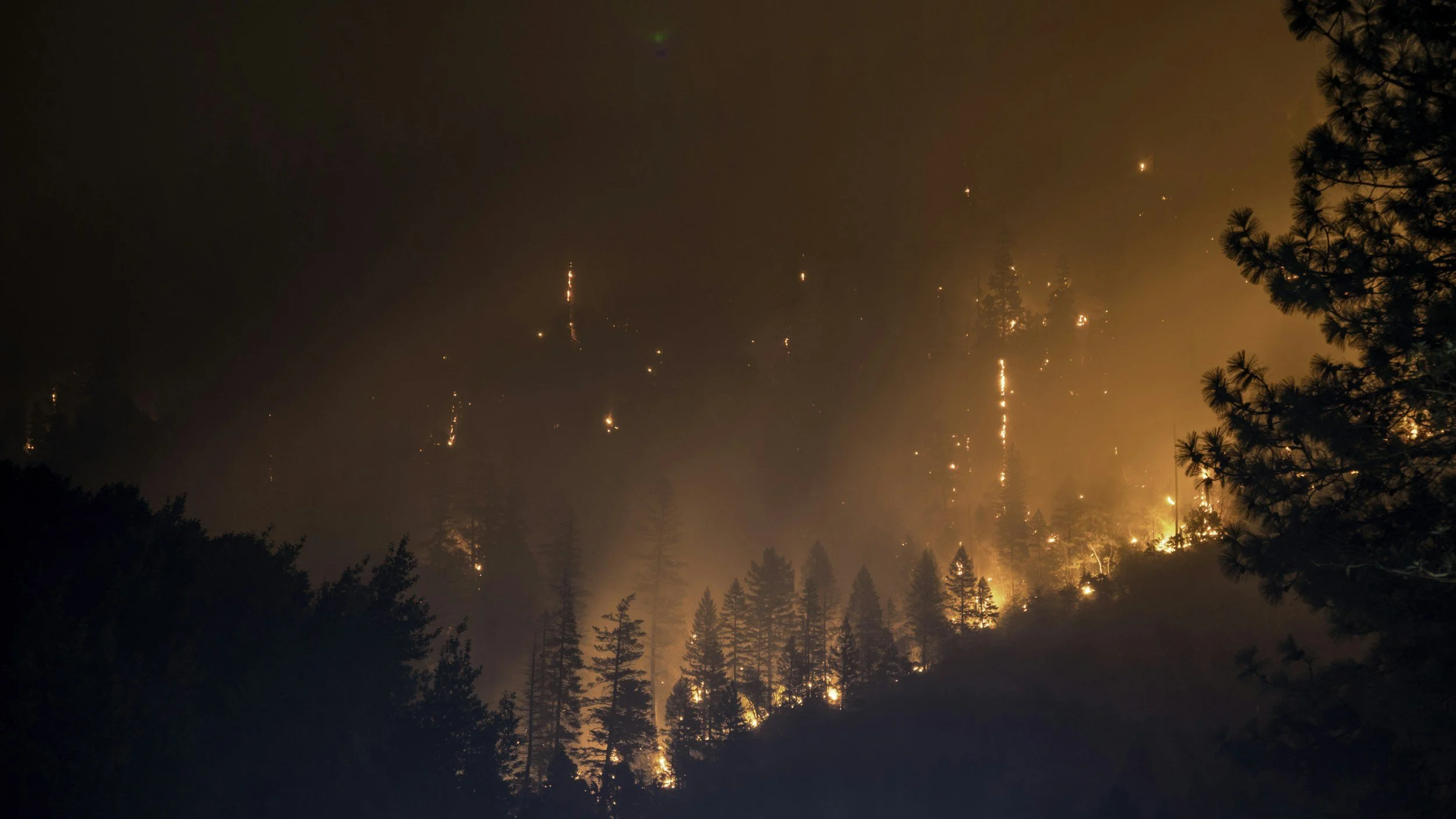
You packed the car in the dark. Maybe you grabbed the photo albums, or maybe you grabbed nothing that made sense: a phone charger, a houseplant, or the wrong shoes. You sat in a parking lot somewhere east of the smoke and refreshed the evacuation map until your phone died.
And then you came home. And your house was still there.
You should feel relieved. You told everyone you felt relieved. But a week later, you're still not sleeping; you flinch when you smell smoke in the hallway; your go-bag is still in the trunk because unpacking it feels like tempting something; and underneath all of it is a low, restless hum you can't name.
If you've caught yourself thinking I have no right to feel this way, this post is for you.
The math almost nobody is talking about
Roughly 65,000 people were ordered to evacuate during the Spokane Complex Fires. Somewhere between 700 and 1,100 structures were damaged or destroyed.
Sit with that ratio for a second.
It means that the overwhelming majority of people whose lives were upended by these fires did not lose their home. Tens of thousands of us packed, fled, waited, and came back to walls that were still standing.
And nearly every one of those people is now walking around with a nervous system that hasn't gotten the memo and a conscience that keeps saying: "Other people lost everything, so sit down."
I've heard some version of this from client after client this week. Not "I'm devastated." Something quieter and more corrosive: I feel guilty for being this shaken. I didn't earn this.

Grief is not a queue
Here is the thing I most want you to hear: suffering is not a line where the person ahead of you cancels your place in it.
Your neighbor lost her house. That is a catastrophe, and it is true, and it does not make what happened to you into nothing.
Because something did happen to you. You may not be able to point at it, which is precisely the problem. You didn't lose a structure. You lost the assumption that the ground under this city was solid. You lost the version of Spokane where the ridge above Indian Trail was just a nice view. You lost the belief, which most of us walk around with and never examine, that catastrophe happens elsewhere, such as in California, in the news, or to other people.
There's a clinical term for this kind of loss: ambiguous loss, a concept developed by researcher Dr. Pauline Boss. It describes grief without a clear object: loss that has no funeral, no casserole, and no card. Nobody brings a lasagna over because your sense of safety burned down. There's no ritual for it. And without a ritual, grief tends to go underground and come out sideways: as irritability, as restlessness, as a strange inability to enjoy things, or as a compulsive need to check the news.
That underground grief is what's keeping you up. Not weakness. Not drama. Grief with nowhere to go.
What your body is actually doing
For several days, your body ran an emergency program. Adrenaline and cortisol flooded your system so you could pack fast, drive fast, and make decisions fast. That program is brilliant, and it is supposed to be brief.
The problem is that it doesn't switch off just because the danger did. Your body needs to complete the stress cycle, not just have the threat removed; unfortunately, most of us never got to complete anything. We went from evacuation to logistics to work emails, with no moment where the body registered it's over now.
So it stays on. Which looks like:
Exhaustion that sleep doesn't touch
Waking at 3 a.m. for no reason, or lying awake listening for wind
Jumping at the smoke detector chirping, or crying at something small
Trouble concentrating; reading the same paragraph four times
Compulsively checking containment percentages and evacuation maps
Feeling numb, flat, or oddly disconnected from people
Physical symptoms: headaches, stomach trouble, a chest that won't unclench
None of these are signs that something is wrong with you. They're signs that your body did its job and hasn't been told it can stand down.
The part nobody's naming: the anger
There's another layer to this one, and I want to name it because I think it's sitting in a lot of chests around this city unspoken.
A suspect has been arrested and charged with first-degree arson in connection with the Old Trails Fire.
That changes something psychologically, and it's worth understanding why. A "natural" disaster, like a lightning strike or a drought, can eventually be metabolized as senseless. Terrible, but nobody's fault. We can grieve it and, in time, make some kind of uneasy peace with a world where weather does what weather does.
This is different. This has a face. And that opens a door onto rage, and onto a hunger for justice, and onto a very particular kind of spiritual vertigo — the question underneath the question: how does a person do this, and what does it mean that I live in a world where they can?
If you've found yourself furious in a way that surprises you, or bargaining with God, or wondering whether meaning is something we find or something we manufacture — you are not spiraling. You're doing the oldest human work there is. You're trying to build a story you can live inside. That work is legitimate, takes time, and is not something you have to do alone.

What actually helps right now
I want to be careful here, because right now is different from in six months.
This is still the acute phase. The fires are not fully contained. People are still displaced. This is not the moment for deep excavation of trauma; it's the moment for stabilization. The deeper work — the meaning-making, the story-rebuilding — has its season, and this isn't it yet. So:
Put scaffolding back up. Eat at roughly the same times. Sleep at roughly the same times. Routine is not trivial; it's how the body relearns that time is predictable.
Give the stress cycle somewhere to finish. Walk. Move. Shake it out. Cry if crying arrives. The body needs a physical ending, not just a mental one.
Ration the news. Twice a day, from one source you trust. Checking the containment map for the fortieth time is not information-gathering; it's your nervous system trying to find safety in a place it can't be found.
Reach for connection before insight. You don't need to understand this yet. You need to be with people. Sit on a porch. Say the true thing out loud to one person.
Do one concrete, useful thing. Donate, volunteer, drop something at a supply drive. Not because it fixes anything — because helplessness is corrosive, and agency is medicine. This is also, honestly, one of the better antidotes to survivor's guilt: guilt asks why me and not them, and action quietly answers and so I did something.
Let the guilt be a signal, not a verdict. That ache you feel about your neighbor is not evidence that your own distress is illegitimate. It's evidence that you're connected to the people around you. That's love, in an uncomfortable coat.
When to reach out for more support
Most acute stress after a disaster settles on its own over a few weeks, especially with rest, routine, and people. But please consider talking to someone if:
It's been more than a month, and things aren't easing, or are getting worse
You can't work, parent, or function the way you normally do
You're using alcohol or other substances to get to sleep or get through the day
You're having intrusive images or nightmares you can't shake
You feel persistently numb, hopeless, or disconnected from people you love
You're having thoughts of harming yourself
That last one is not a someday item. Please reach out today. Call or text 988 for the Suicide & Crisis Lifeline, or the Spokane County Regional Behavioral Health Crisis Line at 1-877-266-1818.
Spokane fire support resources
Resources verified August 6, 2026
Disaster Distress Helpline: 24/7, free, confidential crisis counseling for anyone affected by a disaster. You do not have to be in crisis to call. 1-800-985-5990, or text TalkWithUs to 66746.
Spokane Community Resources hub: Includes Latinos en Spokane, open to everyone, covering mental health, food, housing, legal, and financial assistance.
Spokane County Regional Behavioral Health Crisis Line: 1-877-266-1818
211 Washington: dial 211 for housing, food, financial help, and disaster legal aid
American Red Cross: shelter, supplies, and disaster mental health services
Frontier Behavioral Health: the region's largest behavioral health provider, offering counseling and crisis support
After the Fire USA: recovery resources including a mental and emotional support section, with materials available in Spanish and Russian
City of Spokane: current shelter, evacuation, and community resource listings
One last thing
I'm a therapist in this city. I also watched that plume go up on a Saturday afternoon and felt my stomach drop like everyone else did. I'm not writing this from above it.
What I know, from the work and from being here, is this: the people who struggle most in the long run after something like this are usually not the ones who felt the most. They're the ones who decided their feelings didn't qualify, and so carried them alone.
Yours qualify. Let someone help you carry them.
If any of this sounds like your week, you don't have to sort through it alone. I'm a therapist here in Spokane, and I'm currently seeing clients in person and by telehealth anywhere in Washington. If you'd like to talk it through, I offer a free 15-minute consultation. No pressure, no commitment, just a conversation about whether it would help.
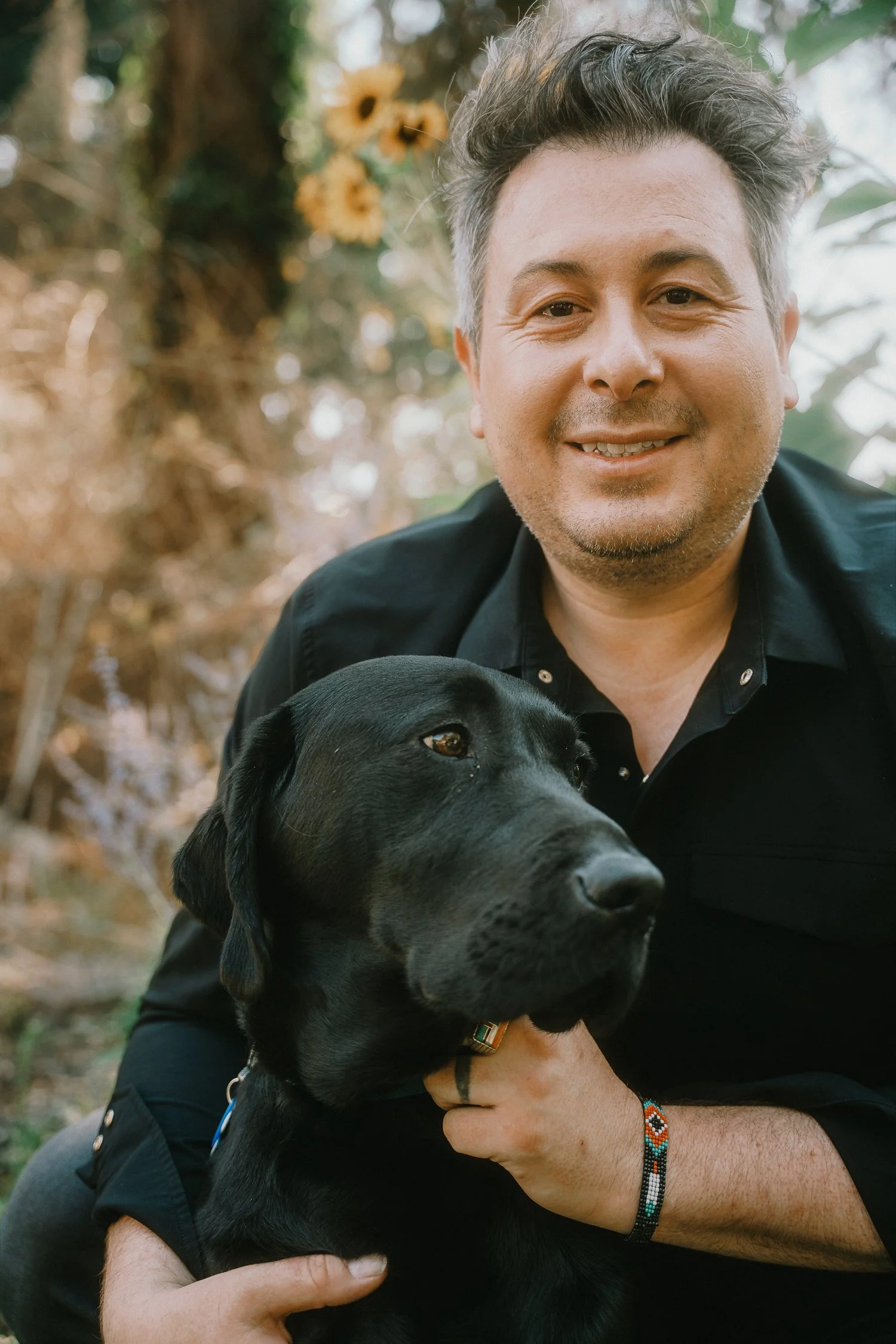
Marshall McLean is a Licensed Marriage and Family Therapist Associate and the founder of Heartland Marriage and Family Therapy in Spokane, Washington, practicing under the supervision of Dr. Elizabeth Campbell. He offers in-person sessions in Spokane and telehealth across Washington State, with a focus on grief and loss, existential and spiritual questions, and relationships.
This post is for general educational purposes and is not a substitute for individual mental health care.